For half a year, Flavatars’ founder worked inside Zeely AI — the platform
that gives small businesses ads at big-brand level — turning generative video
from one-off luck into an ad production engine.
To Zeely, with admiration. The
platform that hands two million entrepreneurs the firepower of a global brand —
and the boldest product team we have ever had the honour of building beside.
Inside Zeely AI, Flavatars turned generative video into an ad
production system. Half a year embedded in the product team as AI Video
Production & Workflow Architect: realism rules that strip the AI gloss,
reference-true cloning, hook craft, voice-over films, multishot continuity,
batch variants. The proof plays on this page — the ads themselves, with sound.
The origin
The film that started it
Before any contract, there was a trial: make something that proves the level.
This vertical promo was that answer — cinema pacing in an ad’s body,
built alone, delivered fast.
Zeely signed. What followed became this case: half a year of building the
systems behind ads like the ones above.
The trial film — 4K master on click
The client
A platform that gives small business big-brand firepower
Zeely AI is one of the boldest products in performance marketing: an AI platform
where a small seller gets what only big brands used to afford — strategy,
ad creative and campaign launch, run end to end. More than two million people
use it, and for many first-time entrepreneurs it is the first AI product
they ever touch.
It is also a rare kind of team: product engineers, marketers and creators
shipping at a speed most studios cannot even brief at. Work made there in the
morning meets real users by night. For a creative craftsman, that pace is the
honest test — and the reason this engagement became a system, not a folder
of videos.
The ask was direct: make generative ads believable, and make believable
repeatable.
The system
From one reference to a production line
The method reads like a director’s discipline written into software. Six moves,
each one a craft of its own:
01
Watch like an editor
The reference ad is taken apart shot by shot: what happens, why it works, what job every frame does in the story.
02
Keep the why
Visual Function Fidelity — a shot’s purpose (effort, proof, payoff) survives the move to a new product even when nothing on screen stays the same.
03
Write the world
Character, wardrobe, room, light — described so precisely that any single frame can be rebuilt on its own and still belong.
04
Direct the machine
Video instructions written like a director’s sheet: staging, camera grammar, speech timing, where the eyes look, what stays quiet.
05
Hold it together
Films are generated in connected blocks, not stitched-together shots — so the voice, the face and the room survive every cut.
06
Judge it honestly
Every output is rated against the reference. The strongest takes become the new bar; the weak ones teach the rules.
Take 1
Take 2
Same brief, two takes
The point of a system is that a strong result is never a lucky one-off.
Two runs on the same Crystal Mind brief — different performances, one
discipline. Tap either for sound.
From the floor
Three stories the system is made of
The disappearing blonde
One heroine kept turning into a different woman between shots. Swapping models did nothing — version after version, the drift stayed. The answer was never the model: it was how her reference travelled through the system. One architectural change, and she finally stayed herself. Engineering thinking beats tool-hopping.
A tool by evening
One morning the analysis service simply refused to work, and the day’s production stood still. By evening Oleg had assembled his own video deconstructor — footage cut into shots, speech transcribed, work moving again. The craftsman had quietly become an engineer.
First takes only
The final test was against his own hands: creatives made the manual way versus the system’s output — first takes, no cherry-picking, no fixes. He wrote the fairness rules himself. His own craft became the bar for the machine he built.
Disciplines
Eight crafts, one engine
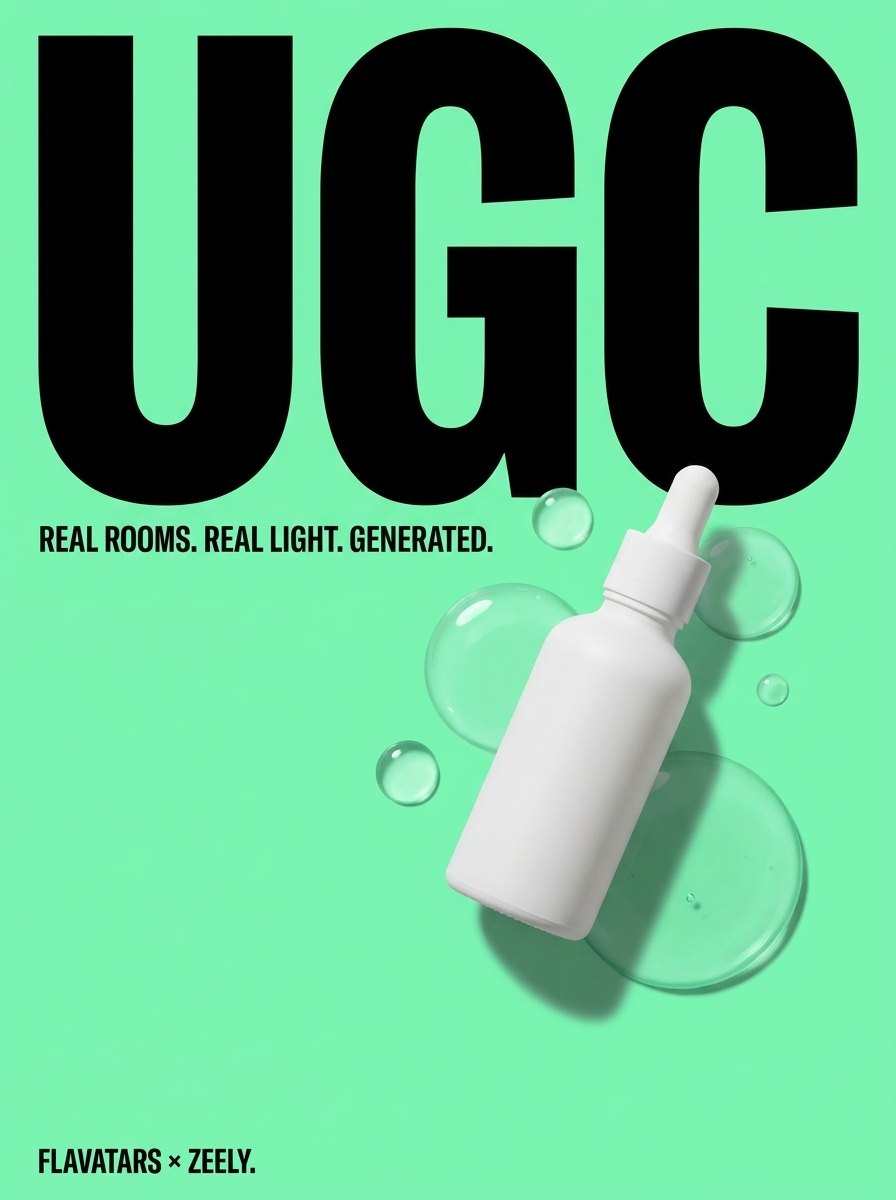
Native UGC realism
The ad cannot look like an ad. iPhone framing, real rooms, imperfect light — a written set of rules strips away the AI gloss shot by shot.
Reference cloning
A winning ad is a structure, not a file. Its pacing, framing and story carry over to a completely different product — legally and recognisably new.
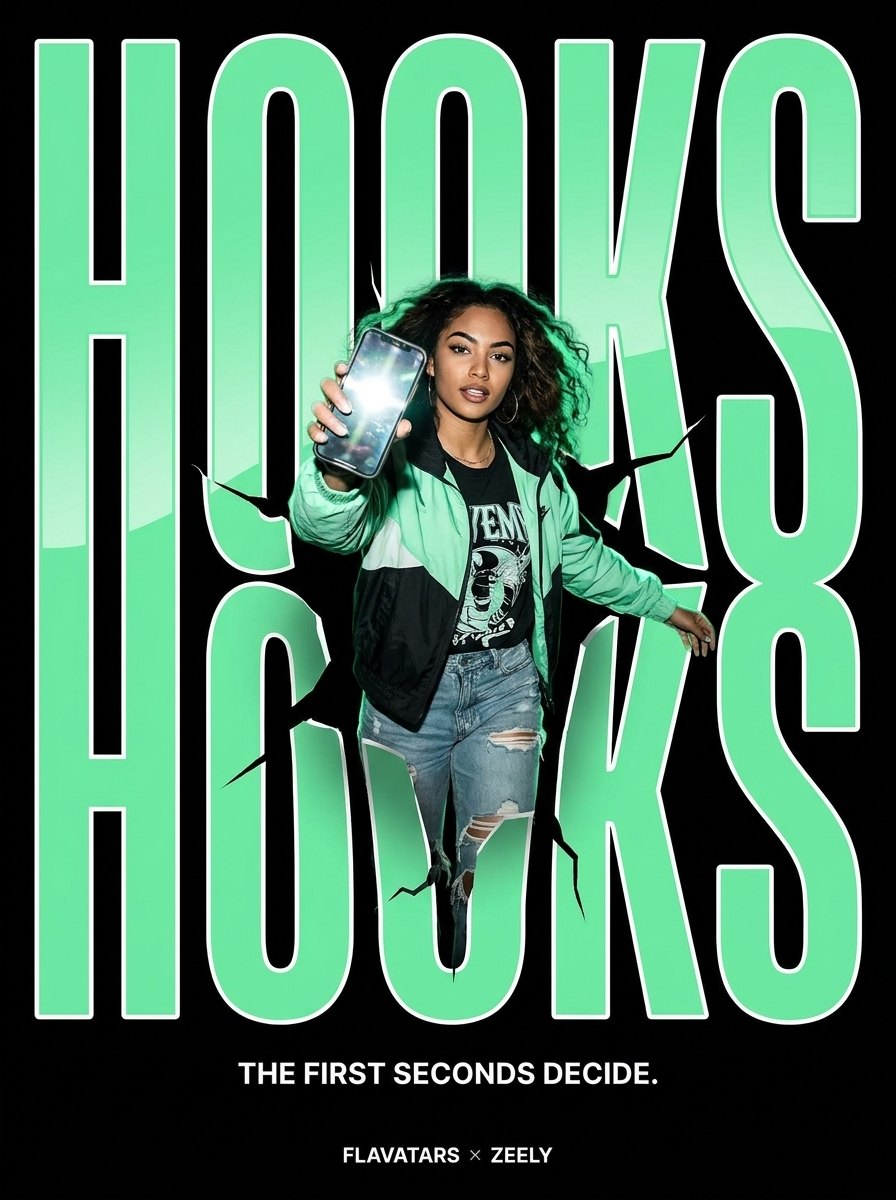
Hook craft
The first seconds decide whether the rest exists. Hooks are studied, catalogued and rebuilt product-native — energy preserved, story intact.
Voice-over films
A written script becomes a performed film. The voice keeps its exact words; the picture learns when to cut, breathe and land with it.
Multishot continuity
One person, one wardrobe, one home — across every cut. Films are generated in connected blocks so nothing drifts between shots.
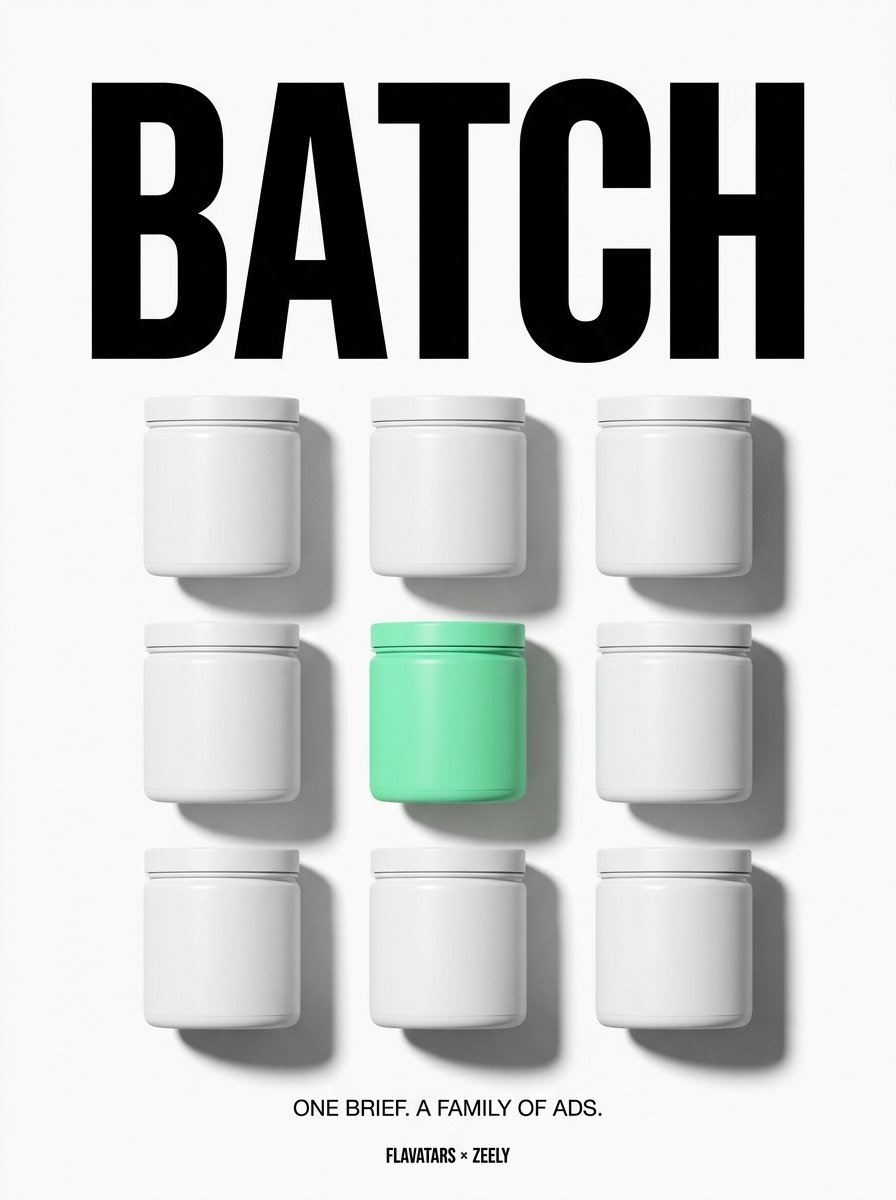
Batch variants
One product in — a family of creatives out: different presenters, different reads, the same discipline. This AG1 take is the sister of the one above.
Identity control
The same face stays the same face. Character identity is engineered into the system, not hoped for — frame one to frame last.
Sound & foley
Room tone, footsteps, fabric, a box opening. Believability is audible — the films carry the small sounds a phone would honestly record.
Series artwork
The collaboration, printed
Poster artwork for Flavatars × Zeely — the engine’s disciplines, one word at a time.
The arc
Half a year, six phases
01
The audit
Watch everything first. Name what holds the creative back, fix the highest-value thing before touching anything else.
02
The style catalog
Lucky prompts become repeatable looks: a described visual language a whole team can shoot in — describing the result, not the process.
03
The avatar factory
Presenters built once and reused everywhere: faces, wardrobe and manner that survive from ad to ad.
04
Hook research
Why the first seconds win — studied across live performance ads, then written down as rules a system can follow.
05
The pipeline
The pieces connect: from reference breakdown to a finished film, one system with quality gates instead of a chain of hand-offs.
06
Production
Real briefs, real product categories, and an honest test of system against hand craft — first takes on the table, no favourites.
What the client keeps
Systems, not files
Reusable UGC production workflows — from reference to finished film
A hook engine: the first seconds, engineered product-native
Reference-true cloning that carries structure, not pixels
Multishot film generation that keeps people and places consistent
Batch variant production across presenters and formats
An honest evaluation loop — the strongest takes set the bar
Documentation the engineering team keeps building on
Facts
The engagement, plainly
Client
Zeely AI — AI ad creative platform (Zeely, Inc., USA)
Period
December 2025 — June 2026, embedded in the product team
Role
AI Video Production & Workflow Architect — Oleg Pylypenko
Mandate
Turn generative video into a repeatable ad production system
Disciplines
UGC realism · reference cloning · hooks · voice-over · multishot · batch variants · identity control · sound
Formats
Vertical UGC video ads, hook-led creatives, voice-over films
The ads on this page — original soundtracks, one click away
Handover
Working systems, creative rulebooks and documentation the team builds on
FAQ
Good questions
What did Flavatars do for Zeely AI? +
For half a year Flavatars’ founder Oleg Pylypenko worked inside Zeely AI as AI Video Production & Workflow Architect: he designed the creative rules and production workflows that turn generative video into repeatable, believable UGC advertising — from reference breakdown and hooks to voice-over films and batch output.
What is an AI UGC ad? +
A performance ad that looks like real creator content — phone framing, natural speech, everyday rooms — but is produced with generative AI. Done right, the viewer reads it as a person’s honest video, not a commercial; that credibility is what makes the format perform.
Why do AI ads usually look fake — and how was that solved here? +
Generative models default to cinema: glossy light, perfect skin, dramatic lenses. The system fights that with written realism rules — phone-native framing, imperfect light, real environments, believable pacing, ambient sound — applied to every shot, so the gloss never comes back.
Can AI video ads be produced at scale? +
Yes — if production is a system rather than a series of lucky generations. Structured creative rules, connected generation steps, identity control and honest evaluation turn one brief into families of consistent ad variants across products and presenters.
What is reference ad cloning? +
Carrying over what makes a winning ad work — its dramatic structure, pacing, shot logic and the job each frame does — to a different product, without copying the footage. The result is a legally new creative that keeps the reference’s persuasive engineering.
Who is Zeely AI? +
Zeely AI is a USA-based AI ad creative platform used by more than two million people: small businesses get strategy, ad creative and campaign launches at a level that used to belong only to big brands. For many first-time entrepreneurs it is the first AI product they ever touch.
Essential cookies remember your preferences (theme, sound) and are always on. Beyond that we would like to measure how the site is used and see which ad led to an enquiry — both only with your agreement. Privacy