

Animation feels alive when a small world seems to breathe and something in it is about to happen. We measured 81 reference animations frame by frame and scored each one for that quality. The pieces people love most averaged 3.6 out of 5 on aliveness against 2.5 for the rest, and genre made almost no difference. What made the difference was timing: one event with a visible cause, drawings held on twos and threes, holds that keep moving, an impact that freezes for a beat, and a loop that closes without a seam. Here are the seven rules, and how to put them into a brief.
What aliveness is, and how we measured it
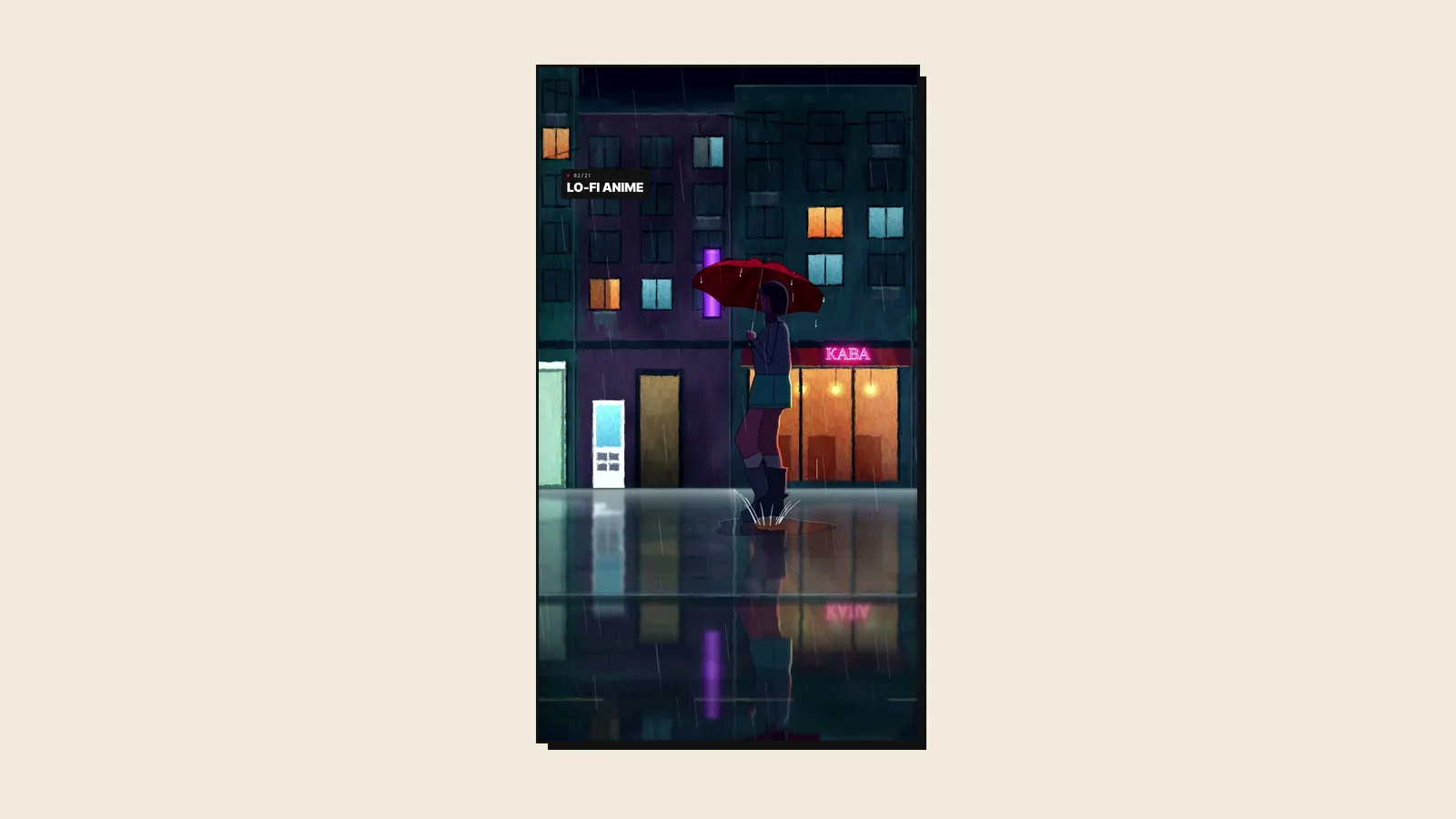
Aliveness is the sense that a small world is breathing and something in it is about to happen. It is the reason a ten-second loop of a rainy street can hold a viewer longer than a polished product render.
To find out where it comes from, we built a reference set from 15 animations our founder Oleg Pylypenko would happily watch on repeat, plus 66 close neighbours: 81 pieces in total. Each one was measured frame by frame: how often the drawing changes, how long poses hold, where the cuts hide, how much of the palette is accent and how much is base. Then every piece got an aliveness score from 1 to 5.
The favourites averaged 3.6. The rest averaged 2.5. Anime, paper cut-outs and 3D toys landed on both sides of the line, which means style was not the variable. Timing was. The seven rules below are what the high scorers had in common.
“Style was not the variable. Timing was.”
Rule 1: one small world, one event with a visible cause
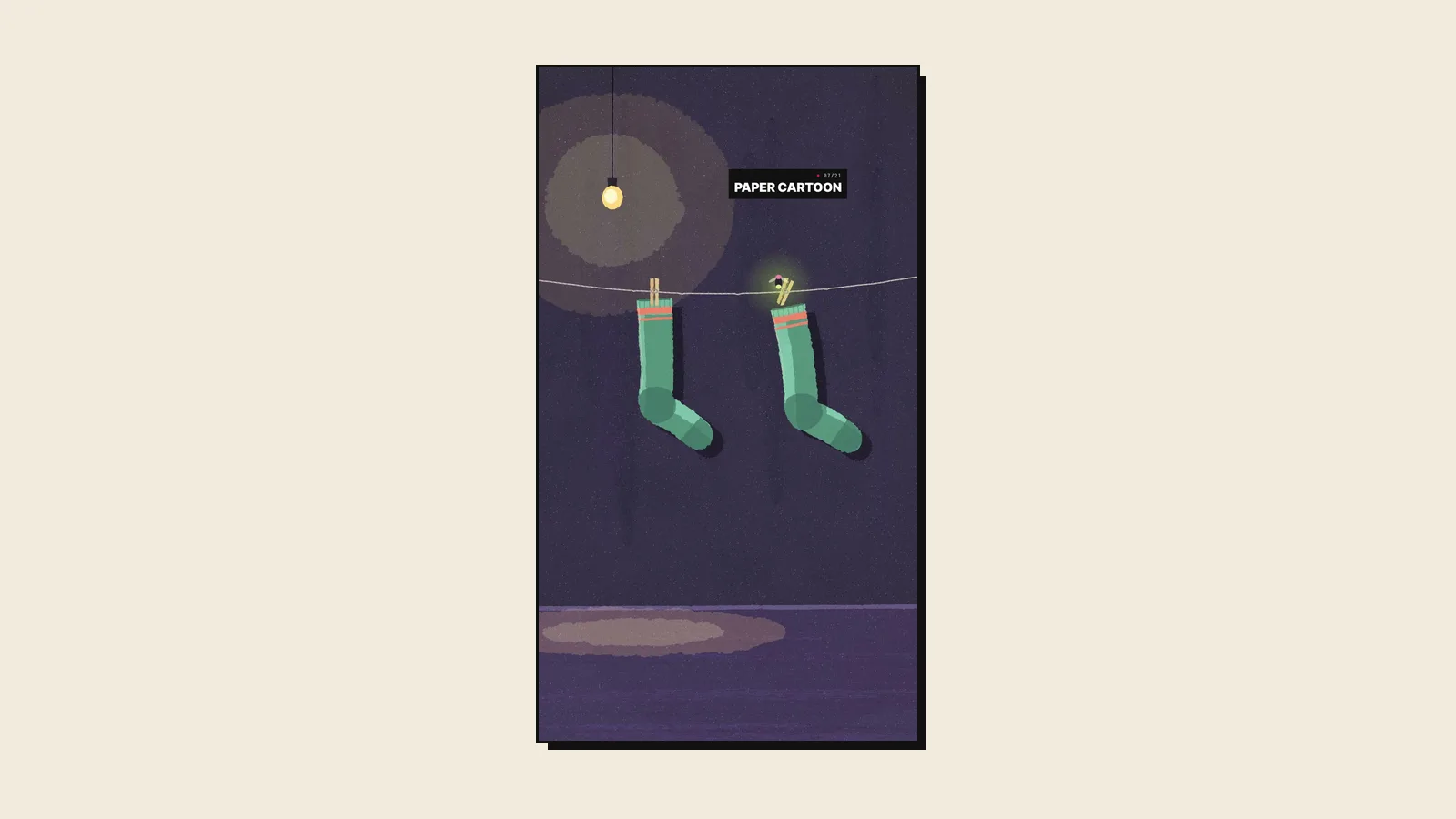
The strongest pieces were not busy. They showed one place and let one thing happen in it, and the viewer could see why it happened. A firefly escapes a matchbox and knocks a clothespin loose, so a sock falls. Cause, then effect.
Ten moving layers without a cause read as decoration. One event with a cause reads as a story, even when it lasts two seconds. When we built our own style library, every piece started with a one-line spec: the event, its cause and the frame where it lands.
Rule 2: step the timing on twos and threes
Hand-drawn animation rarely changes the drawing on every frame. Animators hold each drawing for two frames, called shooting on twos, or three when the action is calm, and switch to ones only for fast moments. The result has a slight pulse that the eye reads as made by hand.
Smooth interpolation on every frame is what makes motion look like software. Our animation library writes the timing as an exposure sheet in code, mixing twos and threes and landing at roughly 13 drawings per second. Texture, light and camera all step together with it, so nothing slides when the drawing holds.
Rule 3: let the holds breathe
A pose that is completely still for a second feels like a freeze. The favourites never froze. While the character held its pose, something small kept moving: rain, paper grain, a flicker of light, a line that boils slightly between drawings.
We call this the living hold, and it is one of the three techniques that bought the most aliveness for the least effort. It costs almost nothing to add and it is the difference between a pause and a dead frame.
“A living hold is the difference between a pause and a dead frame.”
Rule 4: freeze for a beat after the impact
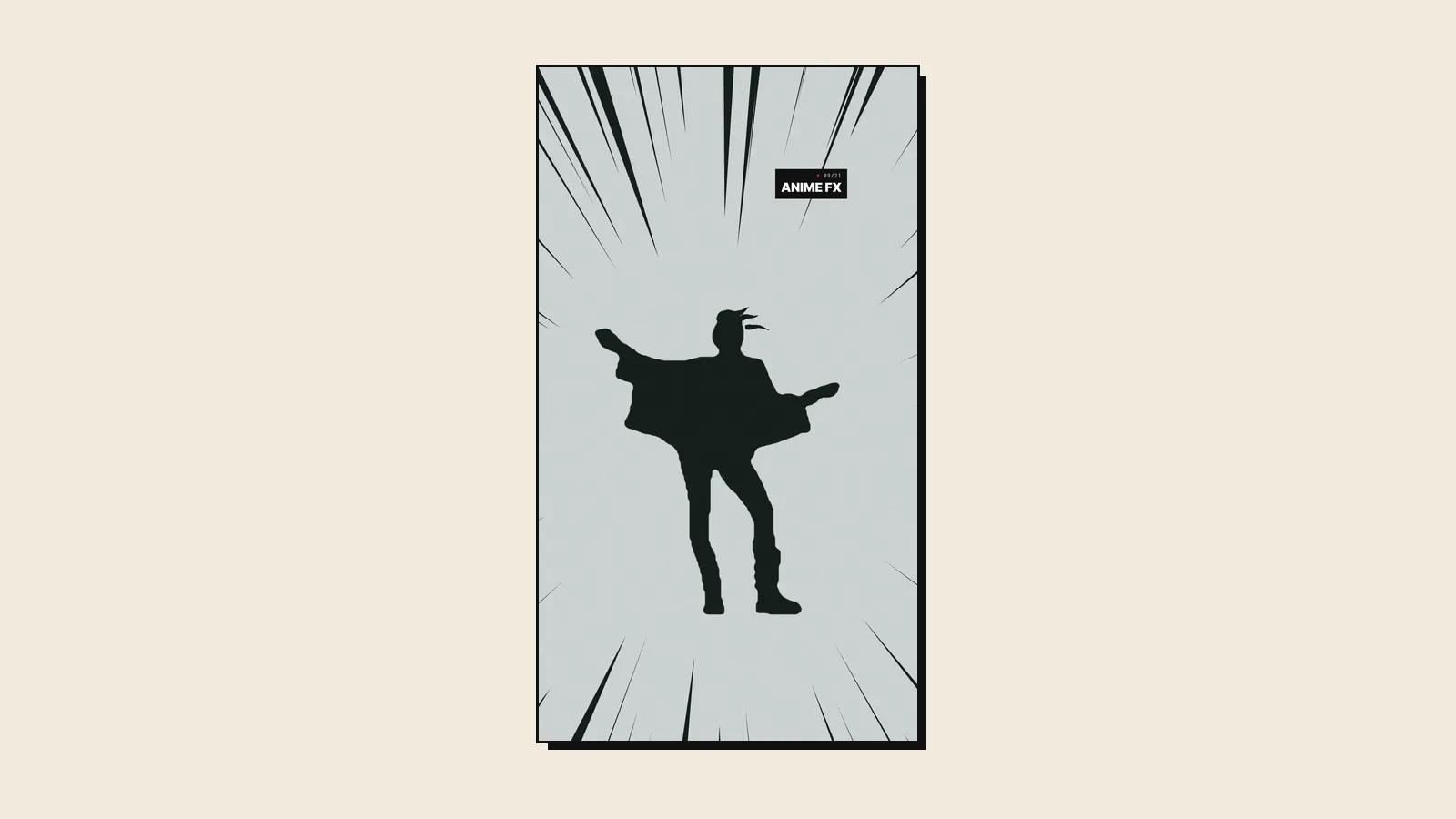
When something hits, the high scorers stopped. The frame held for a beat right after the impact, then the motion continued. Game designers call it a hit-stop; anime uses the same trick with impact frames.
That frozen moment gives the eye time to register the hit, which makes it land harder than any amount of extra motion. It is the second of the three highest-return techniques, together with the living hold and one event per loop.
Rule 5: a muted base and one accent colour
The favourites used restrained palettes. Most of the frame sat in a muted base, and a single accent colour carried the eye to where the event happens: a red umbrella in a blue street, a yellow toy on grey asphalt.
When everything is saturated, nothing is. One accent turns colour into direction, which is exactly what a short piece needs.
Rule 6: hide the cuts inside motion
A hard cut between two shots breaks the spell for a moment. In the pieces people loved, cuts hid inside motion: a lamp post crossing the frame, a splash, a flash, an object falling through the edit into the next shot.
In our own reel a tennis ball drops out of a school locker, falls through the cut and lands in the next world. The viewer follows the ball and never notices the edit.
“Design the loop from the end backwards.”
Rule 7: close the loop without a seam
Short animation usually lives in a loop: on a phone, on a stand, on a screen behind a stage. If the last frame does not hand over cleanly to the first, the viewer sees the restart every few seconds and the world stops feeling continuous.
A good loop is designed from the end backwards: the final pose, light and camera position match the opening, and any sound is cut so it repeats without a click. We check the seam with a script on every piece.
How to brief animation that feels alive
If you are commissioning motion for a brand, a music video or a screen, these rules translate into a short brief. You do not need animation vocabulary, only these questions:
- •
What is the one event? Name it in a sentence, with its cause.
- •
Where does the eye go? Pick one accent colour that marks it.
- •
Where will it play? Phone, screen behind a stage, stand or ad slot decides length, format and whether it loops.
- •
Does it loop? If yes, ask to see the seam in the first cut, not the last.
- •
What reference do you love? Bring one or two pieces; the timing in them says more than any adjective.
What to check in the first cut
Watch the draft twice. The first time, ask whether you can say what happened and why. The second time, look for frozen holds, cuts you noticed and the moment the loop restarts. If any of those jump out, the timing needs another pass, not more effects.
We built a seven-style library around these rules and showed it in a 44-second reel: the Flavatars Motion Lab. If you want motion like this in your next film or on your next screen, our AI video production team takes briefs through the contact form.
Related: Flavatars Motion Lab: Seven Animation Styles, Rebuilt as Code · Cinematic AI video vs generic AI slop