Skip to content

INSON FAXRI · Uzbekistan

Work · National social award · Tashkent, 2025

A country, told through its people

Uzbekistan handed its national award to ordinary citizens for the first time. We made the film that opened the evening — and it argued, without a word of narration, that the country is the people sitting in that room.

1st
ceremony of a national award
1:34
to say what the award is for
4:14
of graphics for one performance
11
nominations, hundreds of stories behind them

In short

INSON FAXRI is Uzbekistan’s national social award. Its first ceremony was held in Tashkent on 18 November 2025 and broadcast nationwide. Flavatars made the opening film, the screen graphics for Ozoda Nursaidova’s «Ajdodlar» and the award identity imagery. Event production: GUBSKY_TH, turnkey. Director: Iaroslav Gubskyi.

The idea

A first ceremony decides what an award will always mean

INSON FAXRI is run by the National Agency for Social Protection under the President of Uzbekistan. It honours ordinary citizens — for courage, for kindness, for self-sacrifice. Specialists spent a year searching the country and gathered hundreds of stories; eleven of them became nominations. On 18 November 2025 the first laureates walked onto the stage of the Palace of International Forums, with the country watching.

A first ceremony has no history to lean on. Whatever it says that night is what the award means from then on. And it carries a contradiction: a state stage speaks in marble, gold and officials, while the people being honoured are a nurse, a rescuer, a teacher. Say it too grandly and you dwarf them. Say it too modestly and the honour loses weight.

The opening film

Ninety-four seconds, no narration

The film resolves the contradiction by inverting it. Nothing monumental is ever shown as a monument. Registan, the domes of Samarkand, the ships stranded in the Aral sand, the open steppe — each of them appears inside the profile of an ordinary person. Then the same profiles fill with the country as it is now: the night city, microelectronics, solar fields, the motorway, the airport, the high-speed train.

Then the double exposures stop and real faces look straight down the lens. They multiply — one, a dozen, a hundred — until the crowd draws the map of Uzbekistan and holds it. The greatness never left the room. It only changed address, from the architecture to the people sitting under it.

The performance

«Ajdodlar» — heritage as a living line

For Ozoda Nursaidova’s performance we built four minutes of screen content to a director’s brief. The brief set one hard rule: convey a thousand years of heritage without literal historical reconstruction. So none of it is a reconstruction.

Lines rise from the bottom of the wall like roots waking, pulsing on the beat. They converge into a fingerprint — one person, unrepeatable, and still made of everything that came before. The fingerprint resolves into a face. The face opens into landscape, ornament, the line-drawn arcade of a madrasah, an atom and its formulae.

Tomyris, Temur and Babur pass through as movement rather than portraits — a stroke, a silhouette, gone. Then roots descend from above and interlace with the face until the two are one drawing. Behind the singer, history is not being illustrated. It is arriving.

The making

Three decisions that carried the evening

01

The country, moved inside the face

The film never shows a monument as a monument. Registan, the Samarkand domes, the ships left in the Aral sand, the steppe — all of it lives inside the profile of an ordinary person, in double exposure. Then the same profile fills with the present: the night city, microelectronics, solar fields, the motorway, the airport. One device, held for ninety seconds, so the argument never has to be spoken.

02

The last shot is the thesis

After the landscapes come real faces, straight to camera — a young woman, another, an old man. They multiply into a crowd of hundreds. The crowd draws the map of Uzbekistan. Nothing is captioned. By the final frame the room has already agreed: the country is the people in it.

03

Built for the screen it played on

Both pieces were authored at 2.30:1 — the native shape of the hall’s main screen — mastered at 3840×1668 and finished at 25 fps for broadcast. The wall was fed real 4K, not an upscale, and both play here at that resolution. A ratio is a decision: at that width the image reads as architecture behind the performer, not as a video on a screen.

The award itself

A gold wing, before it existed

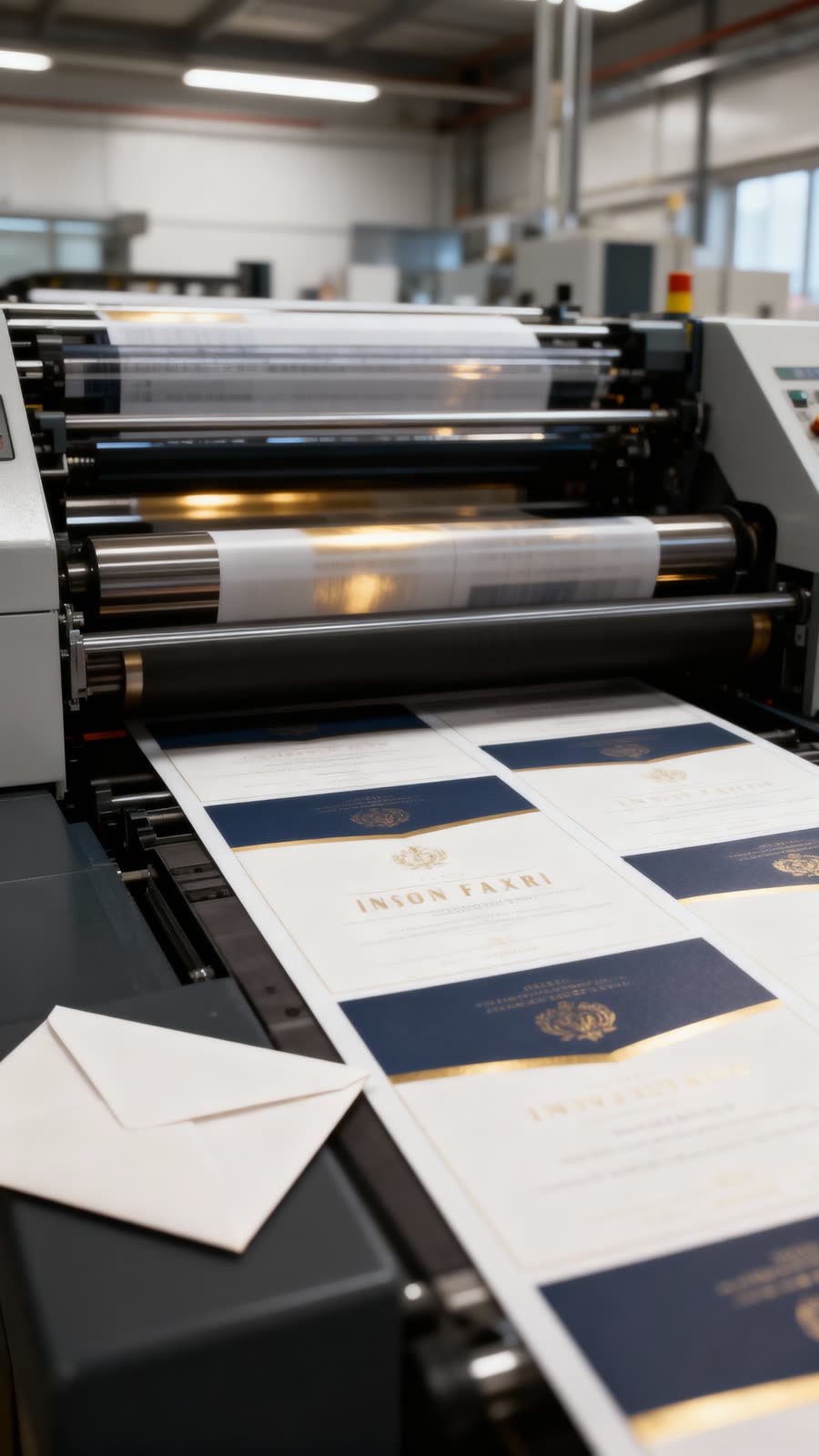
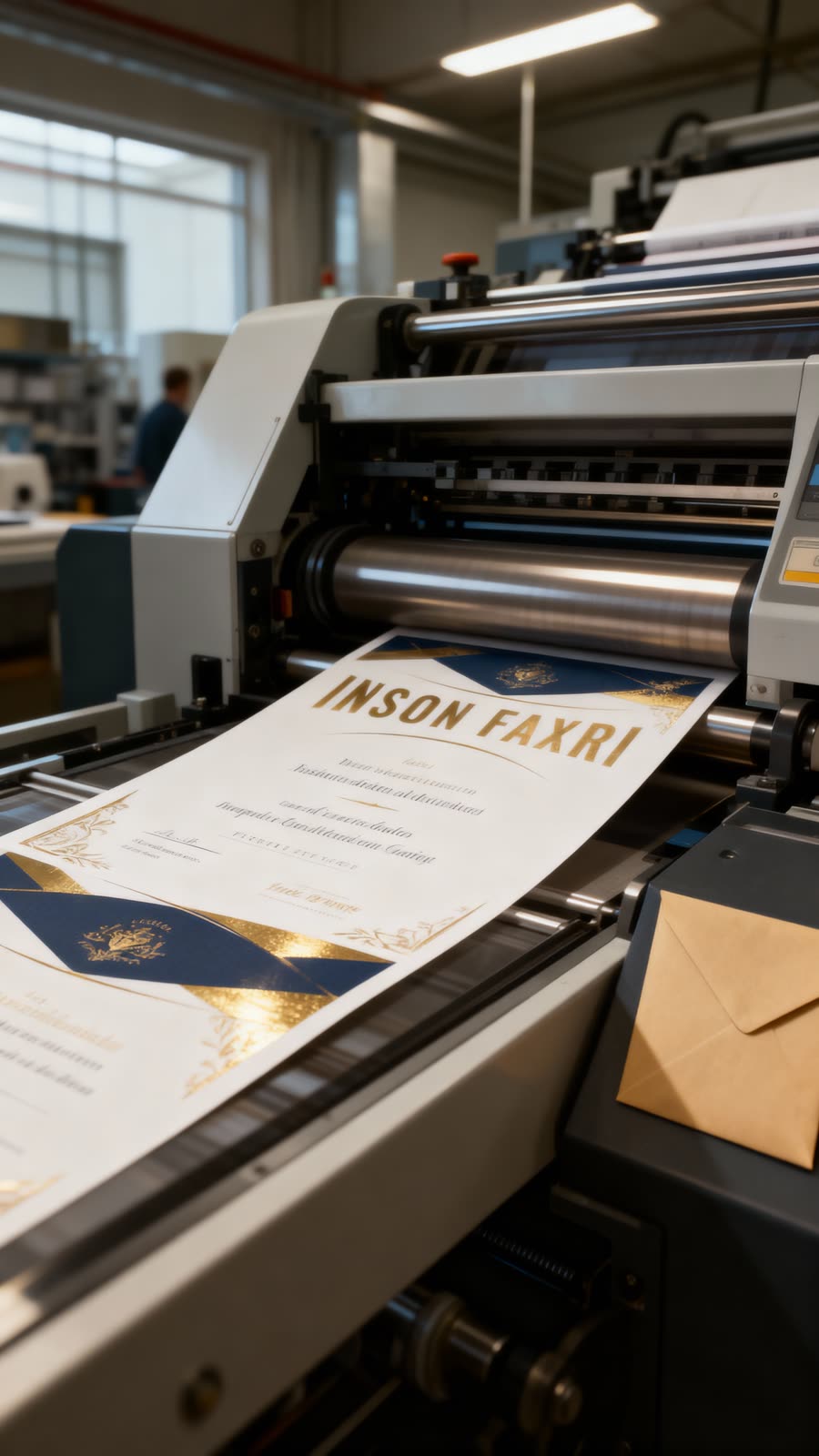
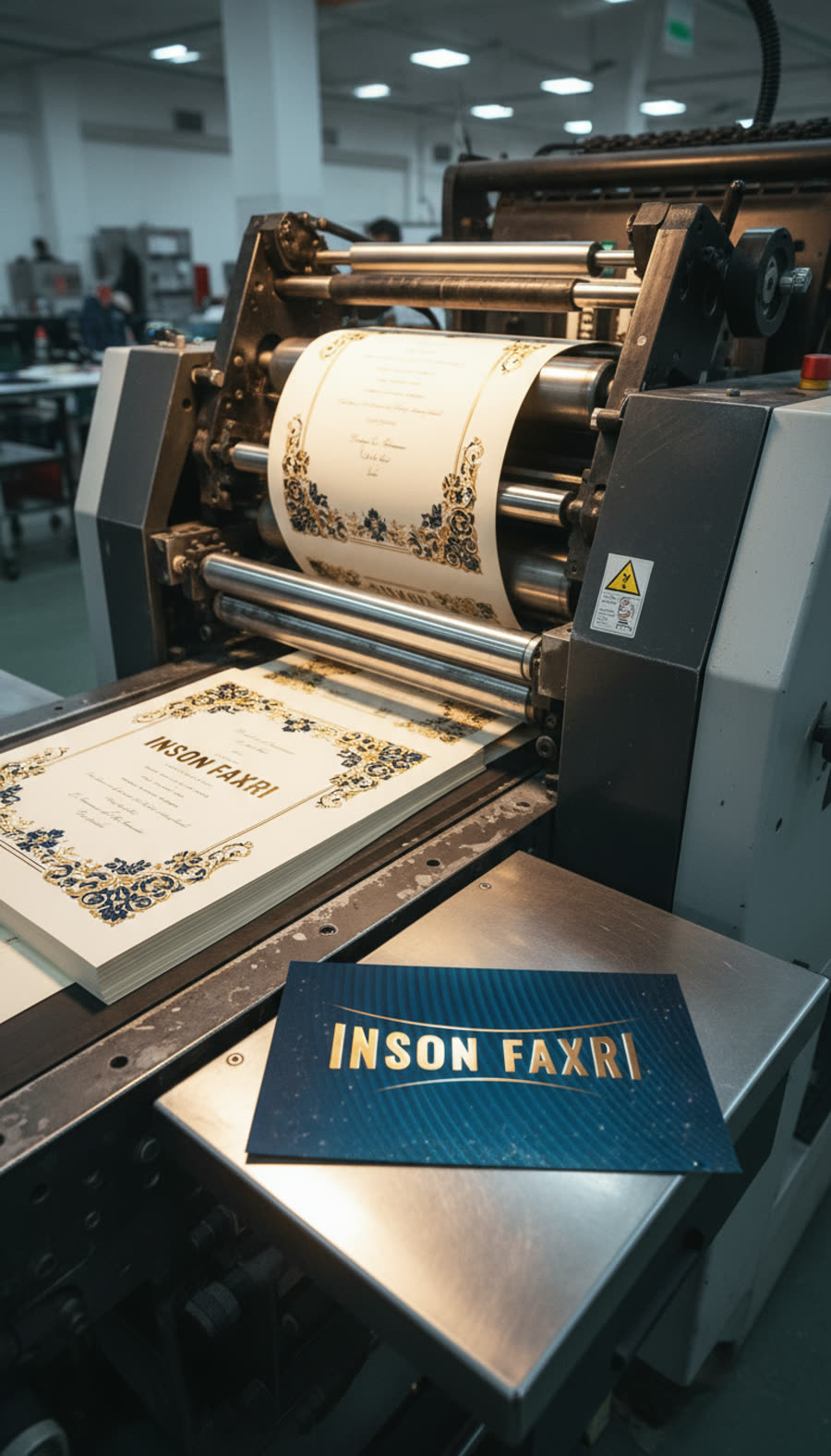
The statuette was designed by others. We made the imagery of it — the renders that show the gold wing under light, the navy-and-gold envelope, the diploma, and a series of frames showing the identity in manufacture: offset rollers, foil landing on a name, invitations stacked and waiting. Pictures of an object that had not been handed to anyone yet.

The invitation on the press.
Navy and gold, in a print run.
The sheet coming off the roller.
Foil, landing on the name.
The finished envelope, in hand.

The night itself

Shot in the hall, not rendered

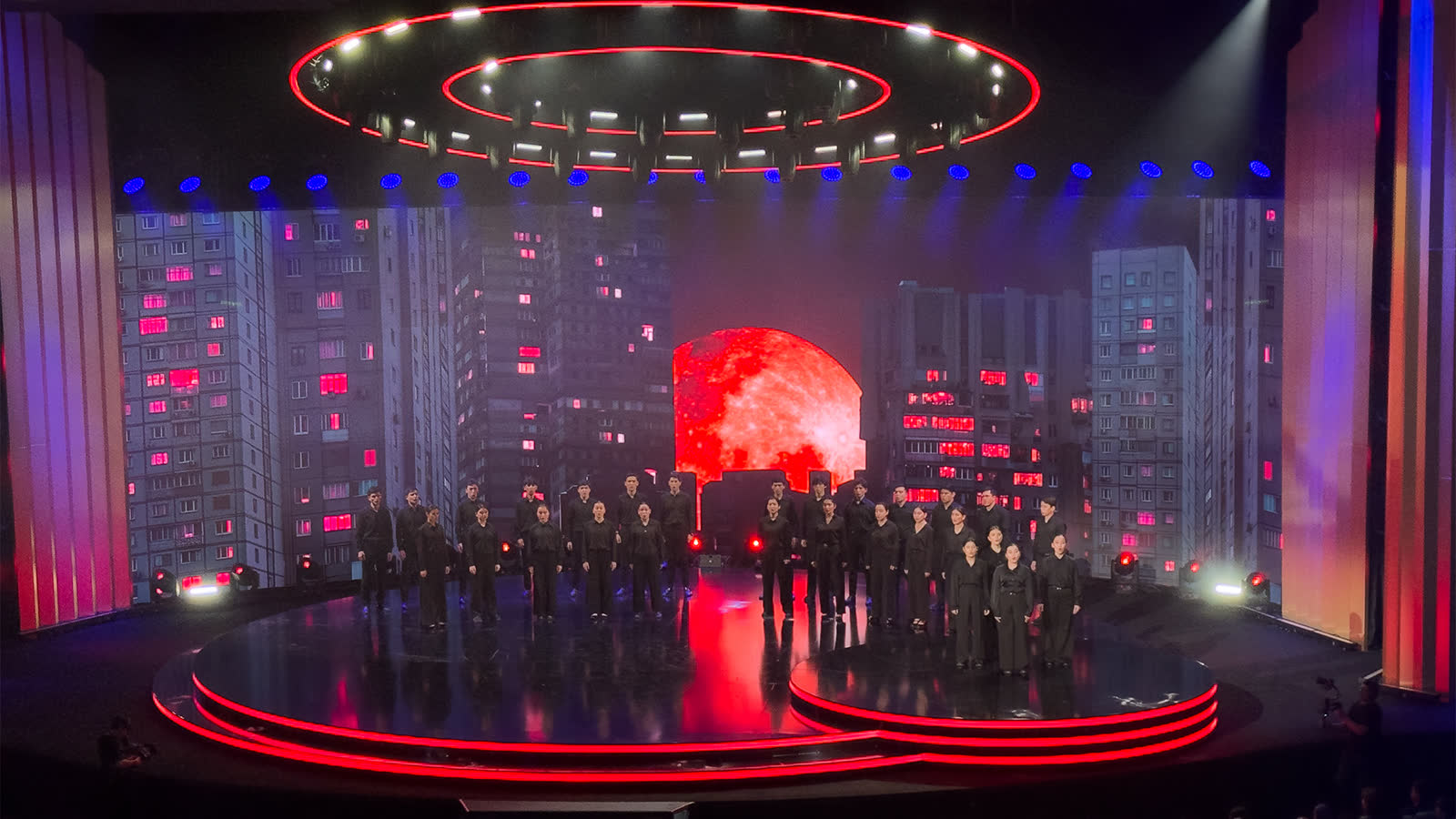
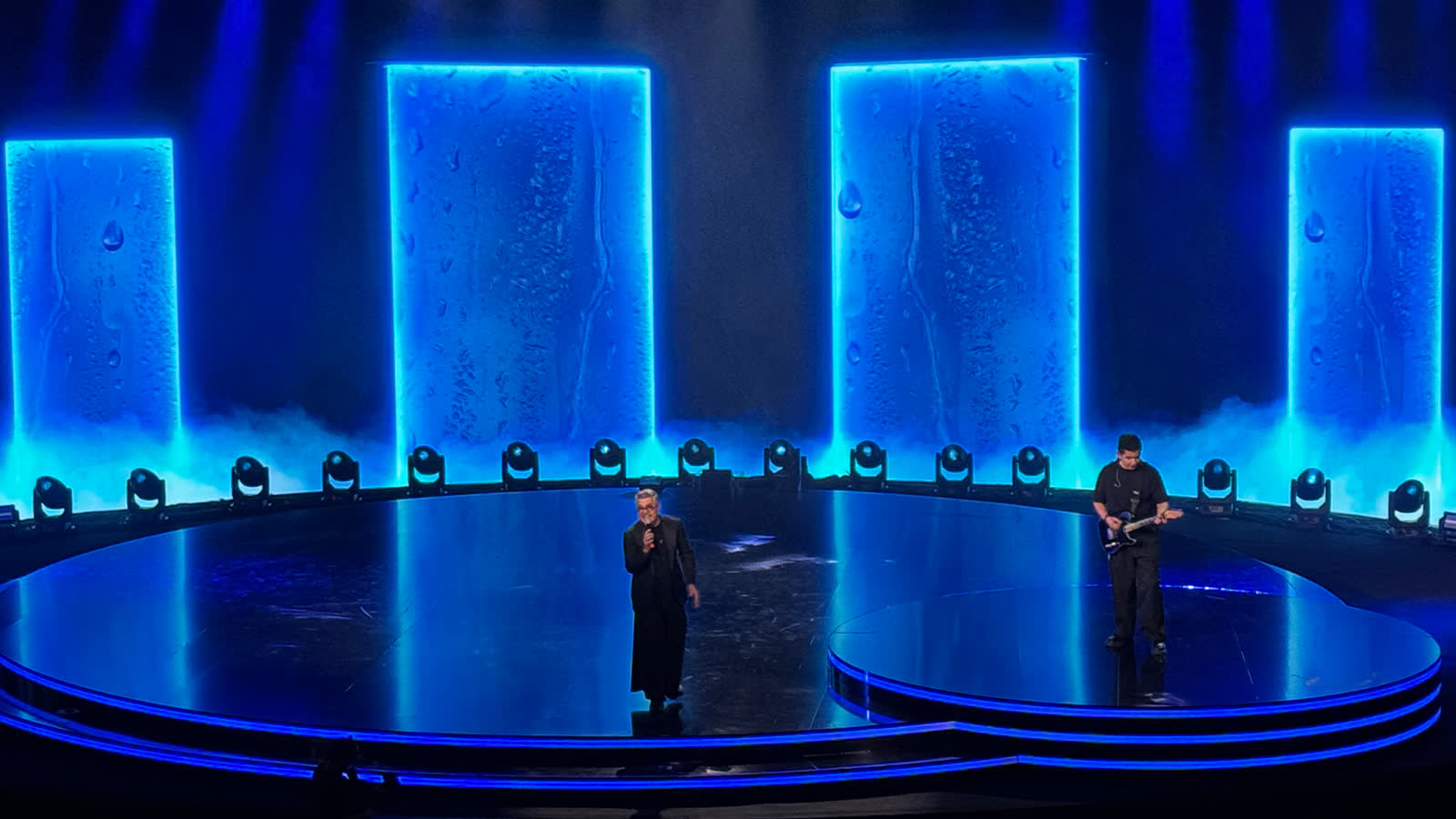
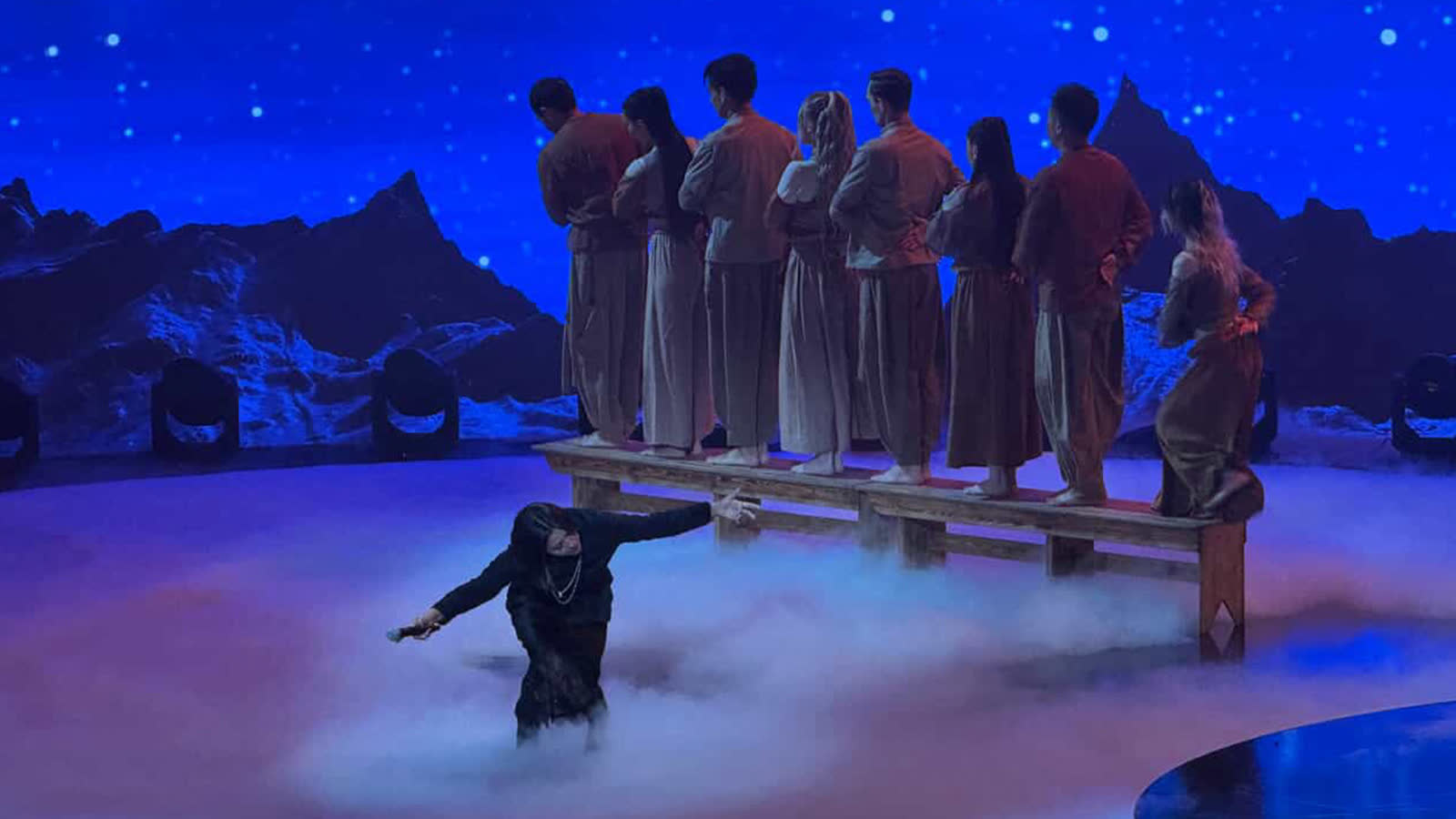
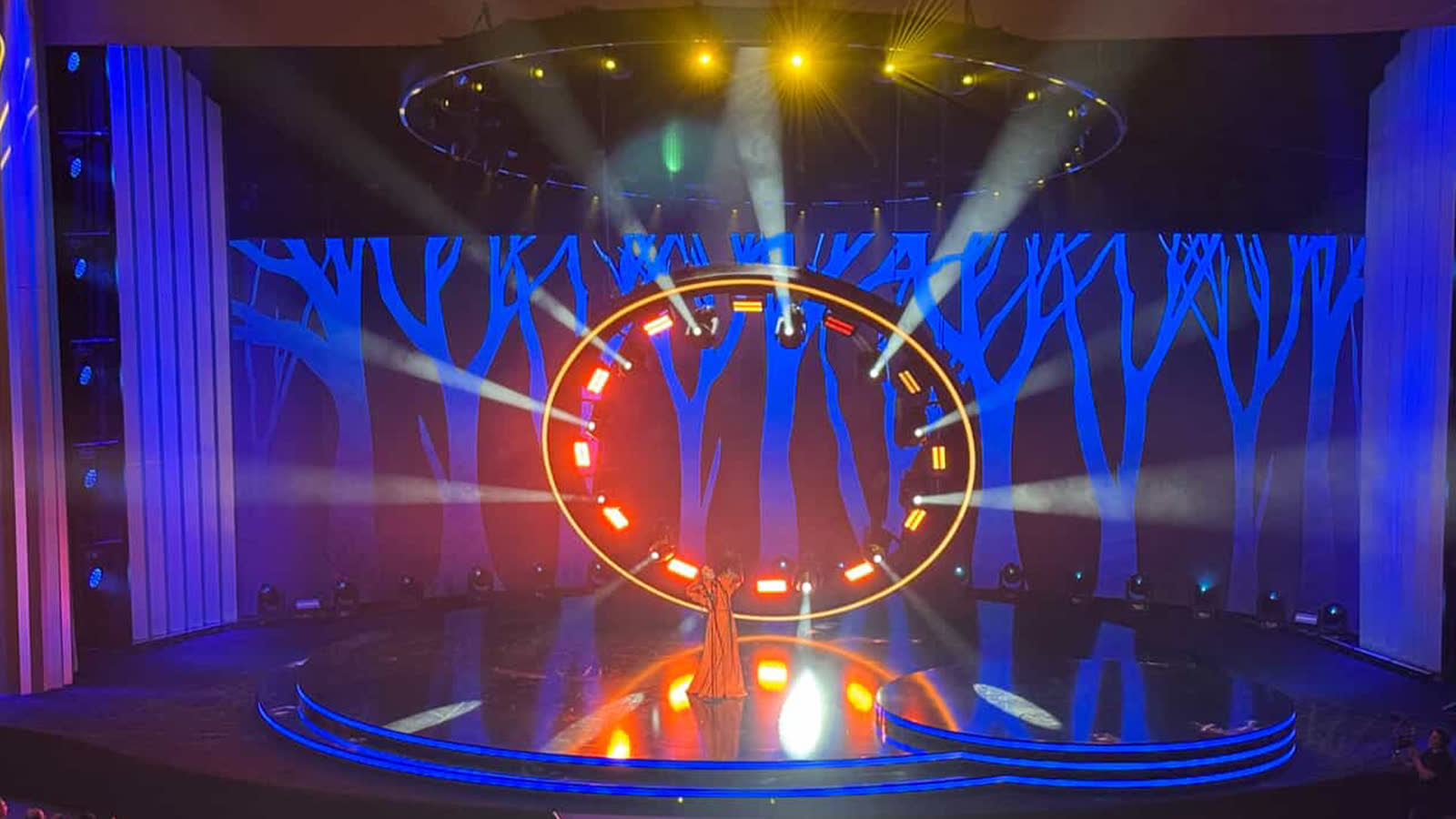
Photographs from the Palace of International Forums: the ring truss over the round stage, the wide screen running the evening, the ensemble, the laureates with the wing in their hands.

The round stage under its ring truss, the wide screen lit behind the ensemble.

[ 01 · THE ROOM THAT DECIDED IT ]

A stage built to look at the people, not above them.

The wide screen, running the evening.
A performance, held inside the graphics.
Laureates of the first INSON FAXRI ceremony, each holding the gold wing.

[ 02 · THE FIRST ONES TO HOLD IT ]

Everything on the screens was for this minute.

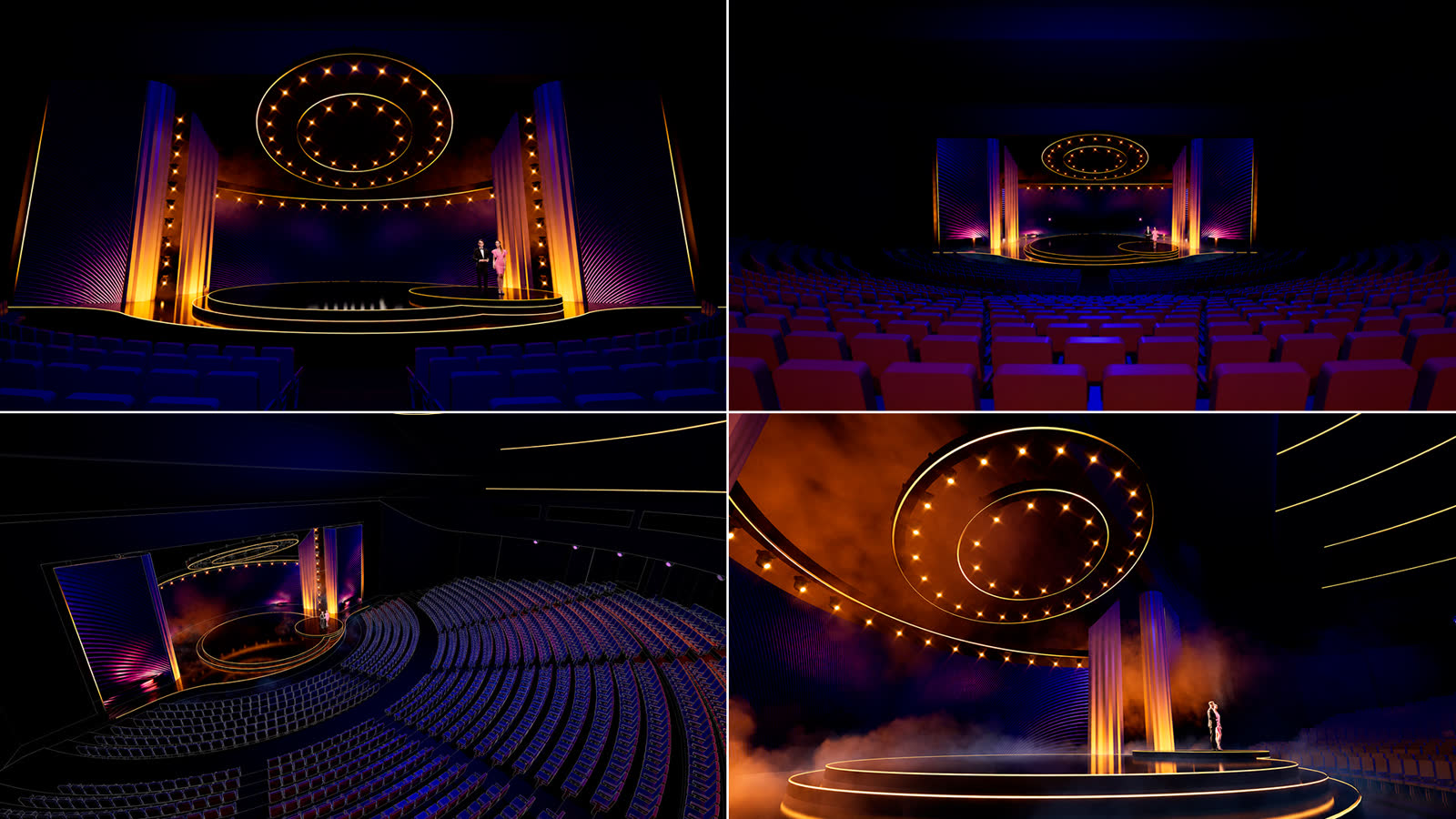
Stage previsualisation of the hall — the round stage, the ring truss and the wide screen.
The hall in previsualisation, before anything was built — stage design by the GUBSKY_TH team.

The evening, cut down

Fifty-seven seconds of the whole room

The event reel cut by the GUBSKY_TH team — the stage, the hall, the laureates, and the screens carrying our work behind them.

Filmed and cut by GUBSKY_TH.

The facts

Everything, in one table

Event INSON FAXRI — first ceremony of Uzbekistan’s national social award
Date 18 November 2025
Venue Palace of International Forums, Tashkent
Award Run by the National Agency for Social Protection under the President of Uzbekistan
Honours Ordinary citizens, for acts of courage, kindness and self-sacrifice
Selection A year-long nationwide search · hundreds of stories gathered
First ceremony 11 nomination categories · more than 10 laureates
Broadcast Nationwide
Opening film 1 min 34 s · 3840×1668 master (2.30:1) · 25 fps · written and made by Flavatars
Performance graphics Ozoda Nursaidova «Ajdodlar» · 4 min 14 s · 3840×1668 master · to a director’s brief
Award identity Illustrations, renders and clips of the statuette and printed identity — the statuette itself designed by others
Flavatars’ scope Opening film · performance graphics · award identity imagery
Event production GUBSKY_TH — full turnkey cycle, from concept to technical and creative production
Producer Elena Romanenko
Director Iaroslav Gubskyi
Creative team Andrey Glushik / Yana Abraimova

FAQ

Quick answers

What is INSON FAXRI?

INSON FAXRI is Uzbekistan’s annual national award in the social sphere, run by the National Agency for Social Protection under the President of Uzbekistan. It honours ordinary citizens for acts of courage, kindness and self-sacrifice. The first ceremony was held on 18 November 2025 at the Palace of International Forums in Tashkent and broadcast nationwide.

What did Flavatars make for the ceremony?

Three things. The film that opened the evening — one minute thirty-four seconds, written and made by us. The screen graphics for Ozoda Nursaidova’s performance of «Ajdodlar» — four minutes, made to a director’s brief. And the imagery of the award identity: illustrations, renders and clips of the statuette, the envelope and the printed diploma.

Who produced the INSON FAXRI ceremony?

GUBSKY_TH, as a full turnkey cycle from concept to technical and creative production. Producer: Elena Romanenko. Director: Iaroslav Gubskyi. Creative team: Andrey Glushik and Yana Abraimova. Flavatars built one layer inside that production — the opening film, the performance graphics and the award identity imagery.

What is the opening film about?

It argues, without a line of narration, that the country is its people. Landmarks and landscapes appear only inside the profiles of ordinary Uzbeks, in double exposure — then the same profiles fill with the present-day country. It closes on real faces multiplying into a crowd of hundreds, and that crowd drawing the map of Uzbekistan.

How do you open a state ceremony that honours ordinary people?

By inverting the usual language. A state stage defaults to marble, gold and officials — which would dwarf a nurse or a rescuer sitting in the third row. So the film puts the country inside the person instead of above them. The scale stays; it simply changes address.

What were the graphics for «Ajdodlar»?

Four minutes of gold-on-black screen content for Ozoda Nursaidova’s performance, made to a director’s brief built on the metaphor of roots. Lines grow from below like memory waking, converge into a fingerprint, resolve into a face, open into landscapes and ornament — with Tomyris, Temur and Babur passing as movement rather than portraits — and finally interlace with the face again.

Whose concept was the «Ajdodlar» number?

The concept came with the director’s brief. Ours was the execution: four minutes of screen content, mastered at 3840×1668 in the hall’s own 2.30:1 ratio, resolved in gold on black.

Why are the laureates not named on this page?

They are private citizens honoured for personal acts, not public figures. Flavatars publishes its own work — the format, the film, the craft. The stories belong to the people who lived them and to the award that recognised them.

What resolution and ratio was the content made in?

Both pieces were authored at 2.30:1, the native shape of the hall’s main screen, mastered at 3840×1668 and finished at 25 fps for broadcast. The wall received real 4K rather than an upscale, and both play at that resolution on this page.

Does Flavatars work on state and national events?

Yes. INSON FAXRI was a national award ceremony broadcast across Uzbekistan, attended by the Chair of the Senate, the country’s chief mufti and representatives of the United Nations. The same practice also covers corporate congresses and stadium shows — the Hyundai Kazakhstan dealer conference and the KeshYou anniversary show are on this site.

The point

Scale is not a size

A national stage can make a person look small. It does it by accident, every time, with marble and gold and distance. The work here was to point the same grandeur the other way — at a nurse, a rescuer, a teacher in the third row — and let the country watch itself agree. Ninety-four seconds. No narration. The map drawn out of faces.

Next case

Pernod Ricard — «EVOLUTION»

Give your stage something worth looking up at.