The interview
The client wrote the story. We made it cinema.
Who is the client?
arc42 — the software-architecture documentation template used by teams across aerospace, medical, e-commerce, telecom, finance, logistics and government. In 2025 it turned twenty. We had known each other since 2023: a photo session for the arc42 book, then filming a public talk — that is where the trust came from. When the anniversary approached, Gernot Starke had been watching our AI films on Instagram and asked for something the community had never had: a brand film.
What was the brief?
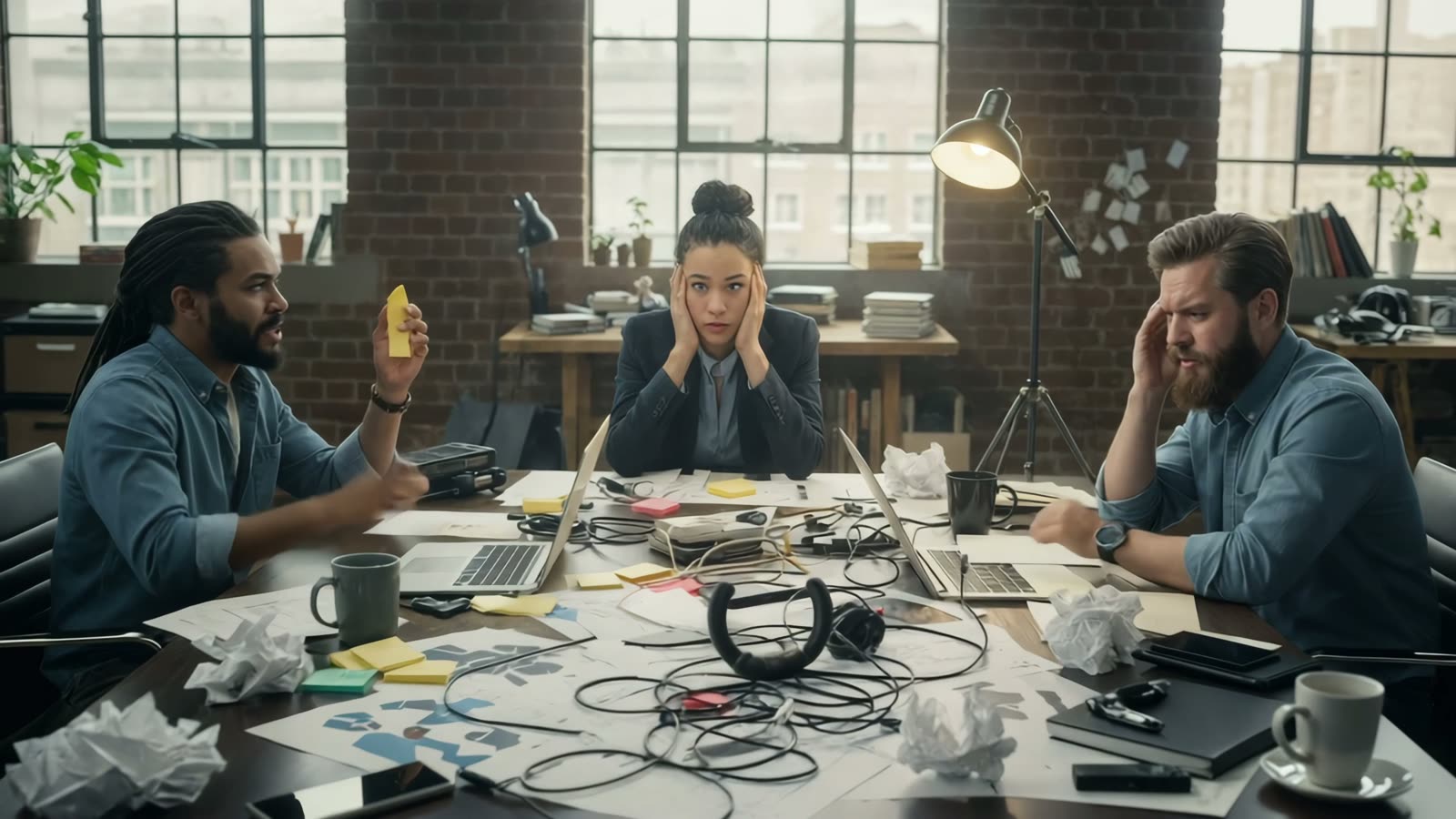
A short promo mixing real and artificial footage around one idea — bringing order into chaos, because that is what arc42 does in software projects. Fifteen to thirty seconds, positive music, made for public talks, the arc42 site and LinkedIn. The client arrived with a finished script: a frustrated team, a wizard, a cabinet with twelve compartments, a happy ending.
What did you keep?
The script — all of it. Gernot and the arc42 team had already built the story, and it was good. Directing is not rewriting: the team in chaos, the wizard, the twelve compartments and the relief at the end are all theirs. Our job was to make that story feel like cinema.
What did you change?
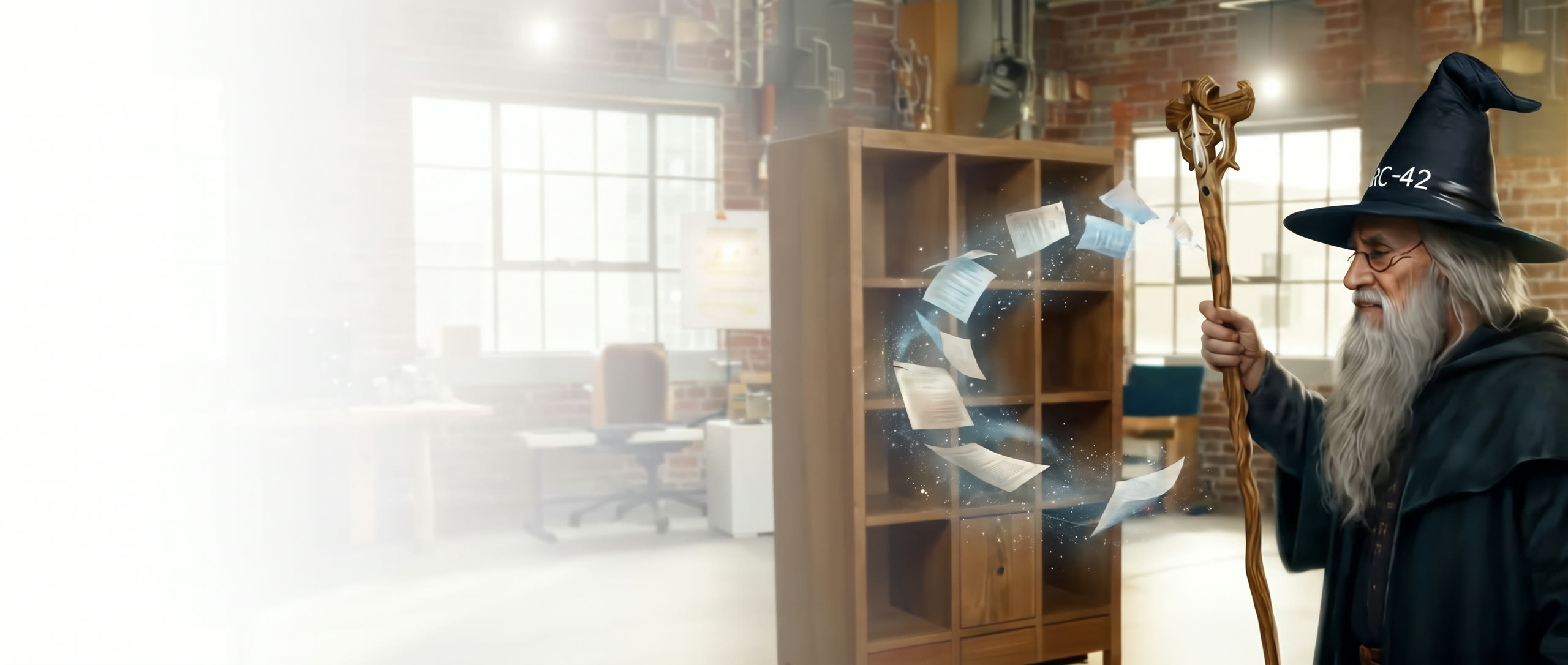
The temperature. The original leaned dark and dramatic; we turned it into a warm dramedy. A cold high-tech office became a brick loft with soft light. A futuristic cyber-mage — after many tests — became a classic, Tolkien-style wizard with round glasses, a pointed ARC-42 hat and faint circuitry woven into his robe. And the cast settled at three characters: the more AI-generated people share a frame, the harder it is to keep faces, anatomy and motion consistent.
The hardest scene?
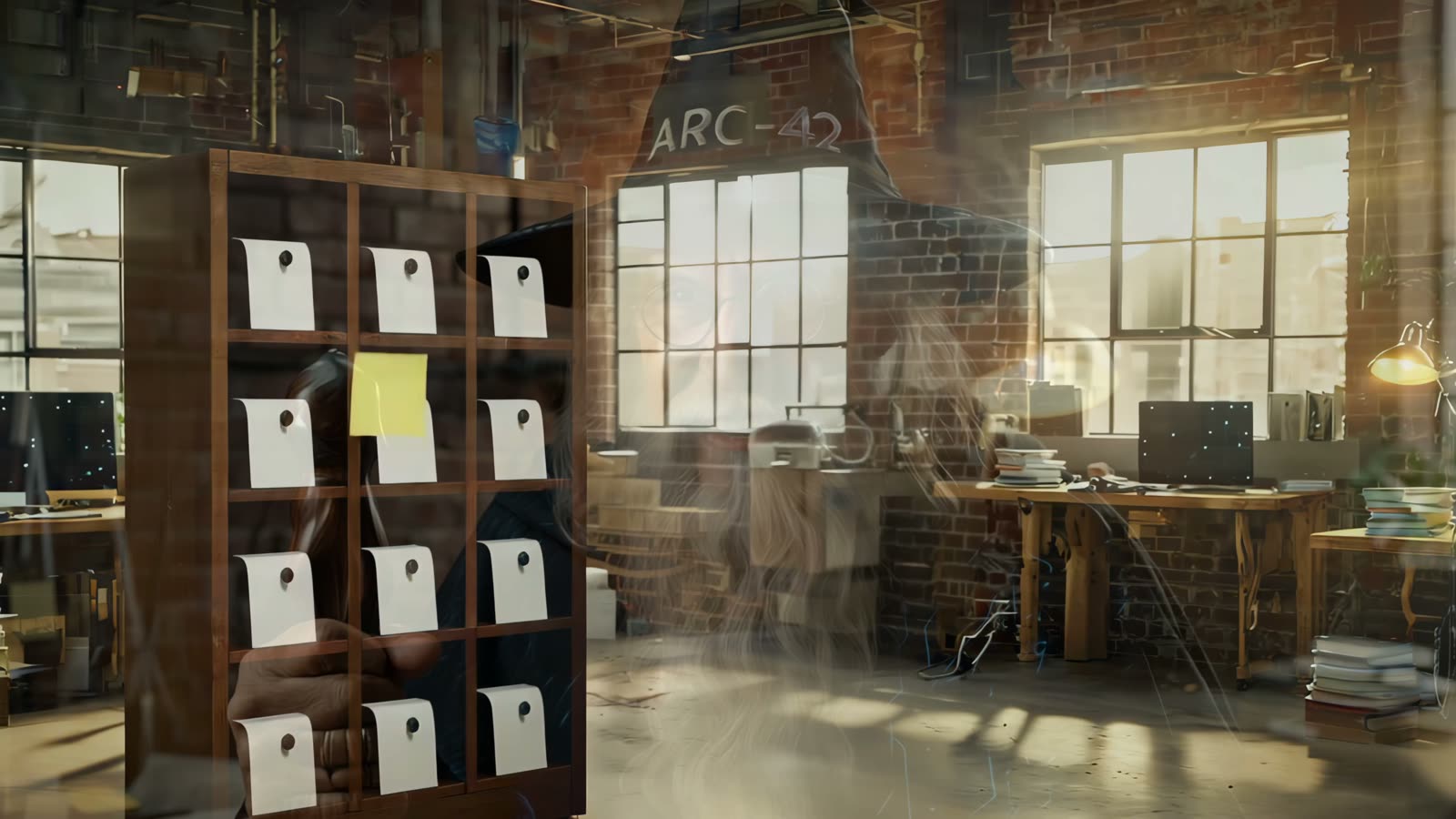
The magic. Generative models are comfortable with people talking at desks; they are far less comfortable with dozens of objects lifting off a table, swirling into a vortex and landing in exactly twelve compartments. Some five-second shots took up to ten hours of tests. The pipeline was hybrid — Runway Gen-4 where it excelled, Kling 2.1 where it did not — and the edit stitched the best fragments so no seam survives to the screen.
And the sound?
The music is an original track built in Suno — warm dramedy, not corporate drama. Sound design was layered scene by scene: room tone, paper, levitation, the vortex, objects clicking into shelves — from Epidemic Sound where the library had it, generated in ElevenLabs where it did not. The narrator is a deep, kind fantasy voice from ElevenLabs. The client received two versions: with the voice-over and without.
What did the client say?
That it exceeded expectations. Gernot posted the film on LinkedIn with full author credit, and the comments started asking for a making-of — the production process turned out to be a story of its own. The film now opens public talks about arc42.